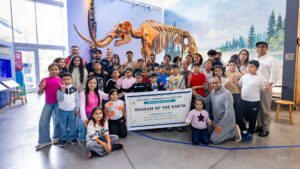
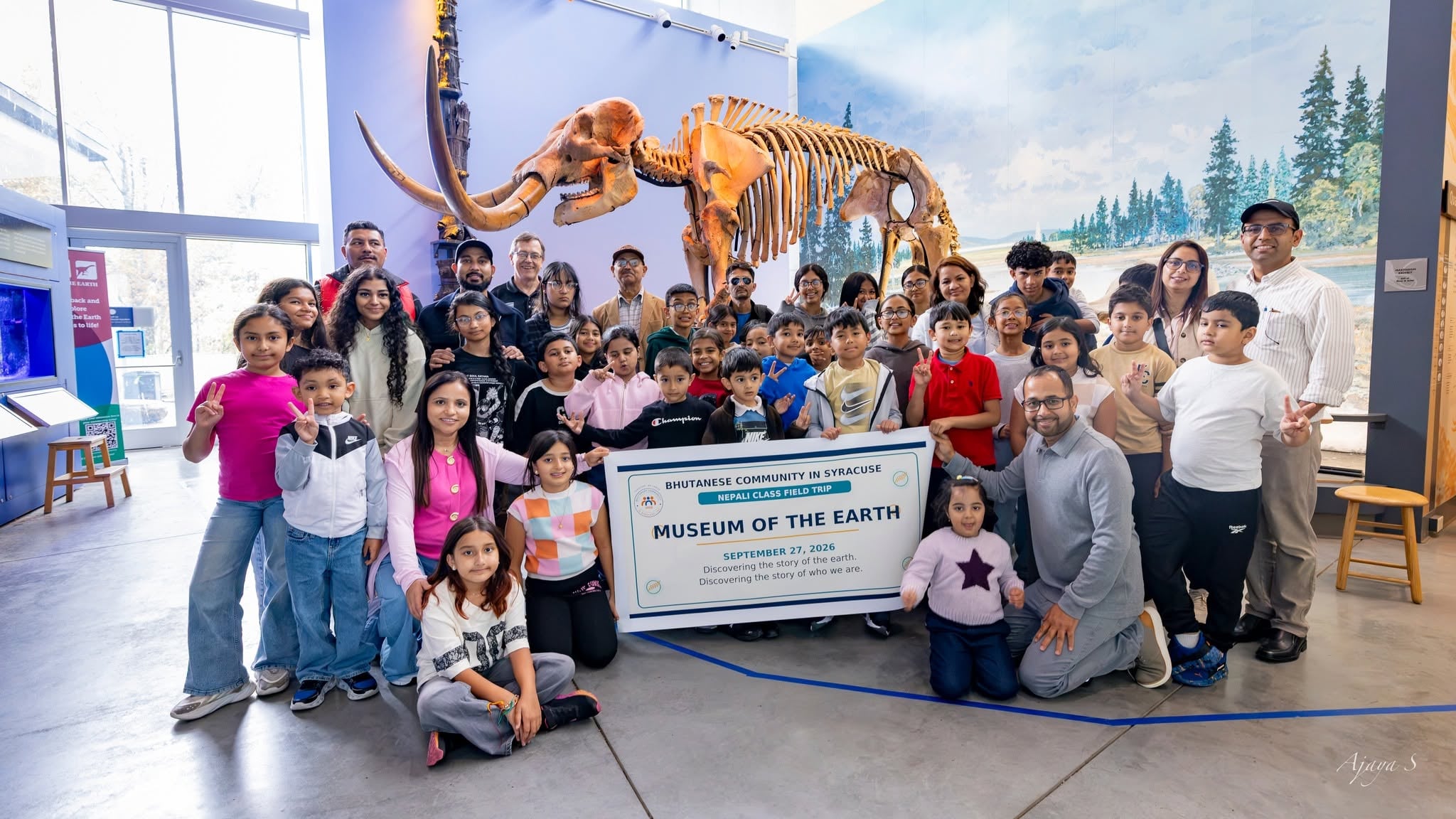
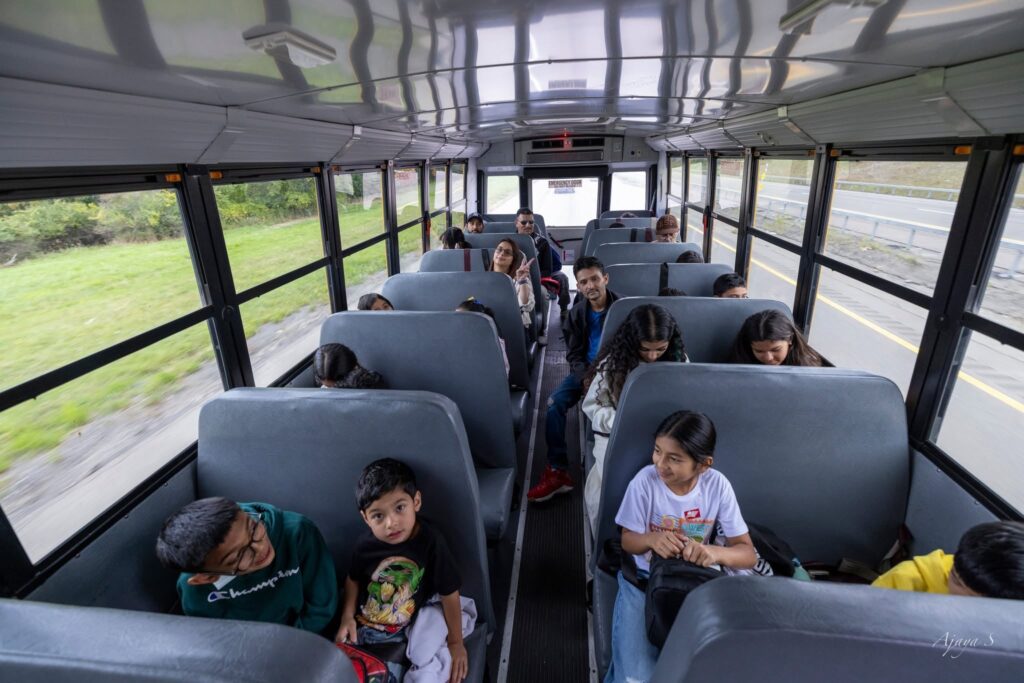
SYRACUSE, N.Y. —The Bhutanese Community in Syracuse (BCS) organized an educational field trip to the Museum of the Earth in Ithaca, New York, on September 27, 2026, providing students enrolled in the BCS Nepali Language Class with a unique opportunity to explore science, history, and the evolution of life on Earth. A total of 35 students participated in the field trip out of 47 students enrolled in the program, reflecting strong student engagement and enthusiasm for learning beyond the classroom.The visit was part of BCS’s ongoing commitment to promoting education, cultural preservation, community engagement, and meaningful learning experiences for children and families within the Bhutanese-Nepali community.
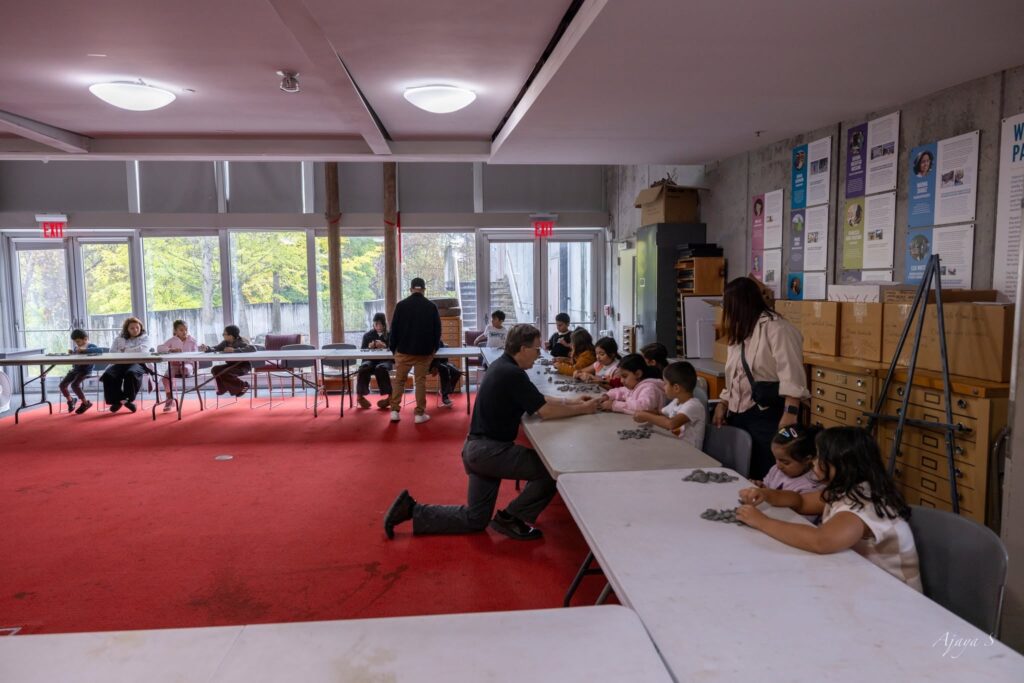
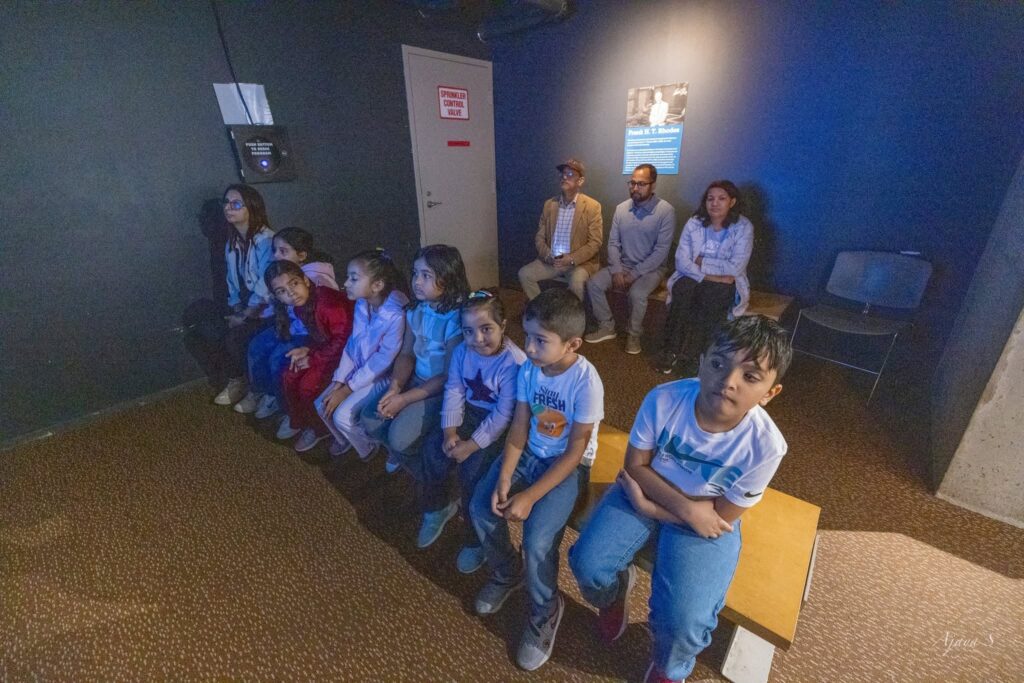
Students explored fascinating fossil collections, prehistoric creatures, and interactive exhibits illustrating billions of years of Earth’s history. The experience encouraged curiosity, critical thinking, and a deeper appreciation for the natural world while creating lasting memories beyond the traditional classroom.
According to Bikash Regmi, President of the Bhutanese Community in Syracuse, the field trip reflects the organization’s broader vision of providing children with educational opportunities that connect classroom learning with real-world experiences.
“Our Nepali Language Class is about much more than teaching children how to read, write, and speak Nepali. It is about preserving our language, celebrating our cultural identity, building confidence, and creating opportunities for our younger generation to learn, explore, and grow together,” said Regmi.

“Many of our children are growing up in the United States while maintaining strong connections to their Nepali culture and language. Through educational experiences like this museum visit, we want them to understand that learning has no boundaries. We want to inspire curiosity, strengthen community connections, and help our children become confident, knowledgeable, and compassionate individuals,” Regmi added.Ajaya Sapkota, Lead Teacher of the BCS Nepali Language Class, emphasized the educational significance of the experience and the importance of connecting classroom lessons with scientific discovery.
“Today’s visit to the Museum of the Earth brought an important part of that learning to life. The fossils and exhibits gave our students a tangible connection to the enormous evolutionary history of life on Earth — reminding us that the human body we inhabit today is part of a story that stretches back billions of years,” said Sapkota.
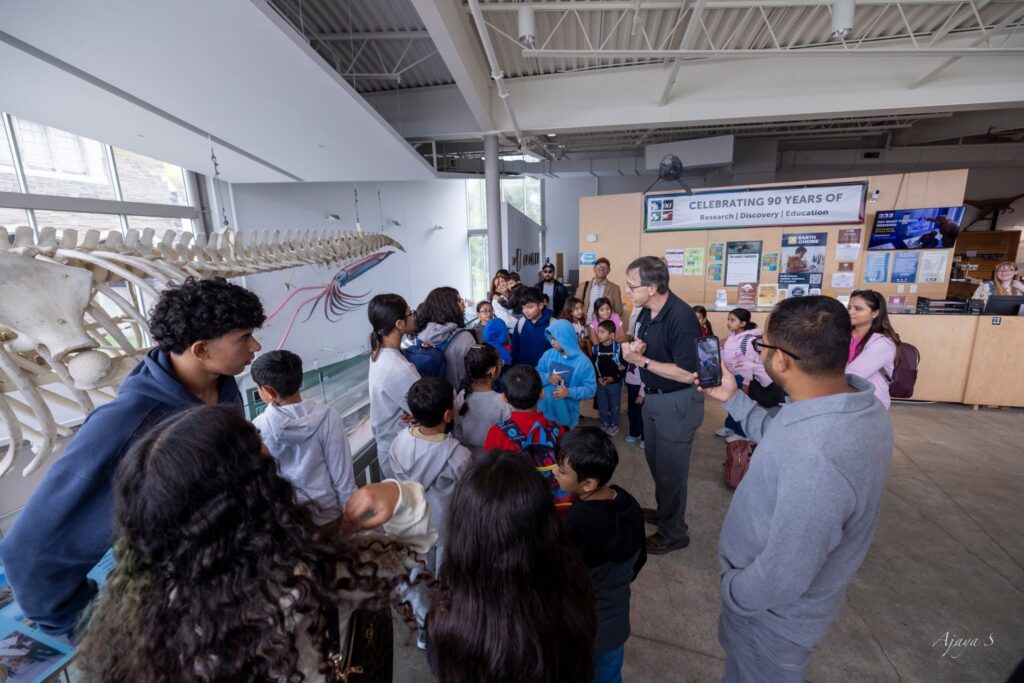
A Meaningful Connection Between Science and Cultural Heritage
The visit also featured a significant cultural and educational contribution from a member of the Bhutanese-Nepali community.
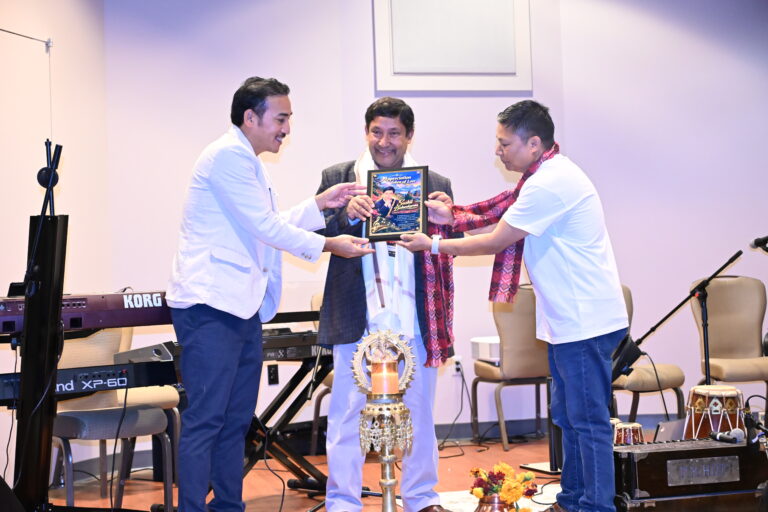
Dr. Prajapati Shapkota, PhD, presented a Shaligram from his personal collection to Robert Ross, Associate Director of Outreach at the Museum of the Earth.A Shaligram is a sacred fossil traditionally found in the Kali Gandaki River region of Nepal. It holds deep spiritual significance in Hindu traditions while also offering a fascinating connection to geology, paleontology, and Earth’s ancient history.
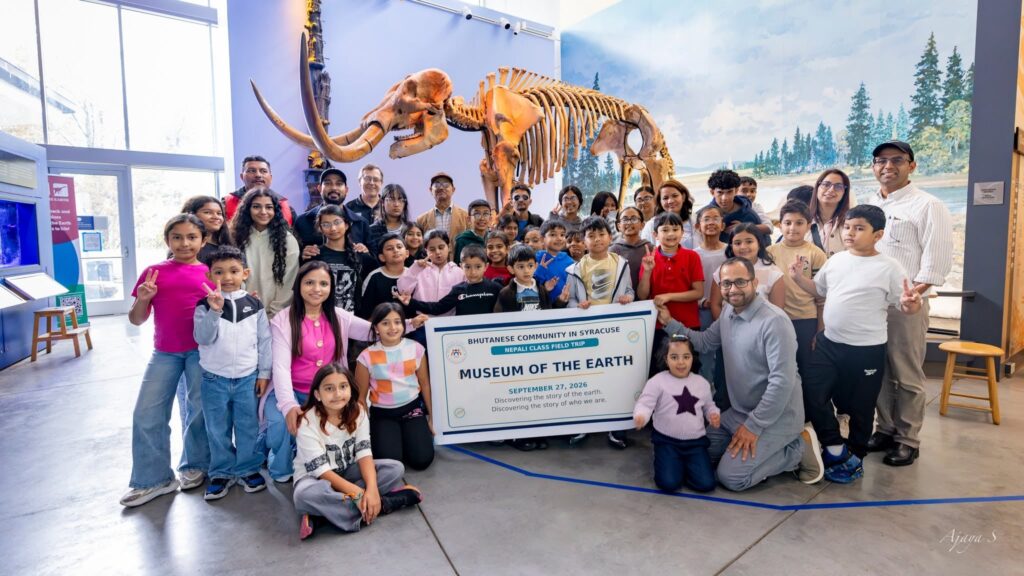
The presentation highlighted the unique relationship between cultural heritage and scientific discovery, creating an opportunity to share an important aspect of Nepali tradition with the museum.
Regmi described the contribution as a meaningful example of how the Bhutanese community can share its rich cultural heritage while participating in educational and scientific institutions.
“This was a special moment for our community. The Shaligram represents a beautiful connection between our cultural and spiritual traditions and the scientific history of our planet. We are grateful to Dr. Prajapati Shapkota for sharing this meaningful piece of our heritage with the Museum of the Earth,” Regmi said.
Preserving Language, Building Community, and Inspiring Future Generations
The BCS Nepali Language Class was established to help children and families preserve their mother tongue, strengthen cultural identity, and maintain meaningful connections with their heritage.In addition to language instruction, the program seeks to provide opportunities for cultural education, leadership development, community service, and experiential learning.
According to Regmi, the success of the program reflects the dedication of teachers, project managers, volunteers, parents, and community members who believe in the importance of investing in the next generation.
“BCS is incredibly proud to bring this Nepali Language Class to our community. This program is not simply about learning a language; it is about building a foundation for our children’s future while keeping them connected to their roots,” said Regmi.
“I want to express my sincere appreciation to our dedicated Lead Teacher, Ajaya Sapkota; Project Managers, Bhim Basnet and Jawala Regmi; as well as the parents and all the volunteers who continue to support this important initiative. Their dedication, time, and passion are what make this program possible,” Regmi added.
Community Partnership and Grant Support
Regmi also acknowledged the critical financial support that helped establish and sustain the program.
The BCS Nepali Language Class is made possible through grant support from the Coalition for Asian American Children and Families (CACF), an organization committed to strengthening Asian American communities and supporting community-based initiatives.
“We are deeply grateful to the Coalition for Asian American Children and Families for believing in our vision and supporting this important educational initiative. Their investment is helping us preserve our language, strengthen our cultural identity, and create meaningful opportunities for our children and families,” Regmi said.
The September 27 field trip demonstrated how community-based educational programs can bring together language, culture, science, and hands-on learning to enrich children’s lives.As the Bhutanese Community in Syracuse continues expanding its educational and cultural initiatives, the organization remains committed to creating opportunities that empower families, celebrate heritage, and inspire future generations.
“When we invest in our children’s education, we invest in the future of our entire community. Together, we are preserving our roots while helping the next generation reach new heights,” Regmi concluded.